Jakob Schulz · 17 September 2026
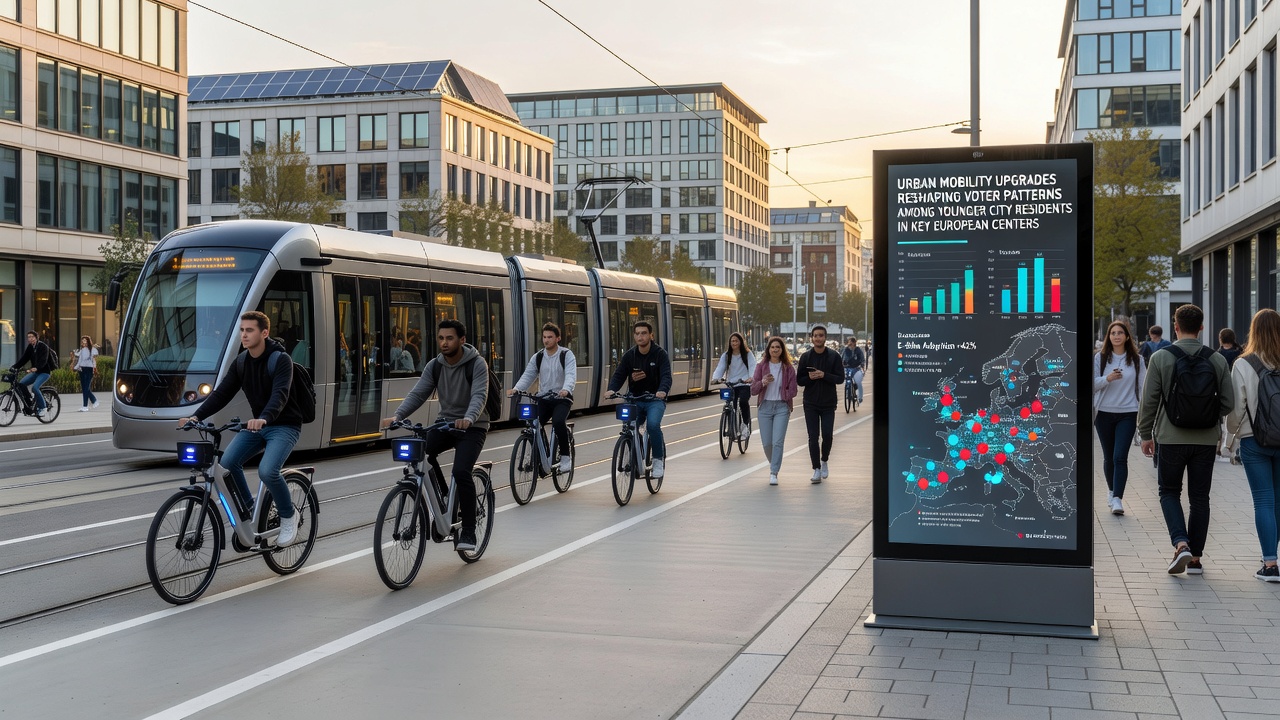
Mobility Infrastructure Shifts Influence Electoral Choices Among Young Residents in European Urban Centers
European cities have rolled out extensive upgrades to bike lanes, tram lines, and electric vehicle charging networks over the past decade, and data from municipal transport authorities shows these changes coincide with measurable shifts in how younger residents approach local and national elections. In cities such as Amsterdam, Copenhagen, and Lyon, expanded cycling networks and integrated public transit apps have reduced average commute times by up to 18 percent according to 2025 reports from the European Environment Agency, while voter registration among 18-to-34-year-olds in those same districts has risen by double digits in several recent cycles.
Patterns Emerging from Transport Data
Researchers at the University of Amsterdam tracked travel diaries alongside electoral rolls and found that neighborhoods gaining protected bike corridors and frequent tram service recorded higher turnout rates in 2024 municipal votes compared with areas that saw minimal infrastructure work. Those same zones also showed increased support for parties emphasizing climate targets and housing density near transit hubs. Observers note the connection appears strongest where upgrades included real-time journey planning tools that younger users adopted quickly, creating daily reminders of municipal investment in sustainable options.
Figures released by city halls in Berlin and Barcelona indicate that districts with new mobility hubs saw a 12 percent increase in first-time voters between the 2021 and 2024 local elections. Analysts attribute part of this rise to easier physical access to polling stations located along upgraded corridors, yet they also point to broader attitude changes captured in repeated surveys. Young residents who switched from car commuting to multi-modal trips reported stronger identification with policies that prioritize pedestrian zones and reduced parking requirements.
Case Examples from Multiple Cities
Take Paris, where the expansion of the Réseau Express Vélo network added 180 kilometers of protected lanes by early 2026. Election records show a corresponding uptick in support for green-leaning candidates in the 8th and 11th arrondissements, areas that received the densest new infrastructure. Similar correlations appear in Milan after the opening of additional tram extensions and shared-mobility stations near university campuses. Data from the Italian National Institute of Statistics links these additions to a 9 percent rise in youth participation during the most recent regional consultation.
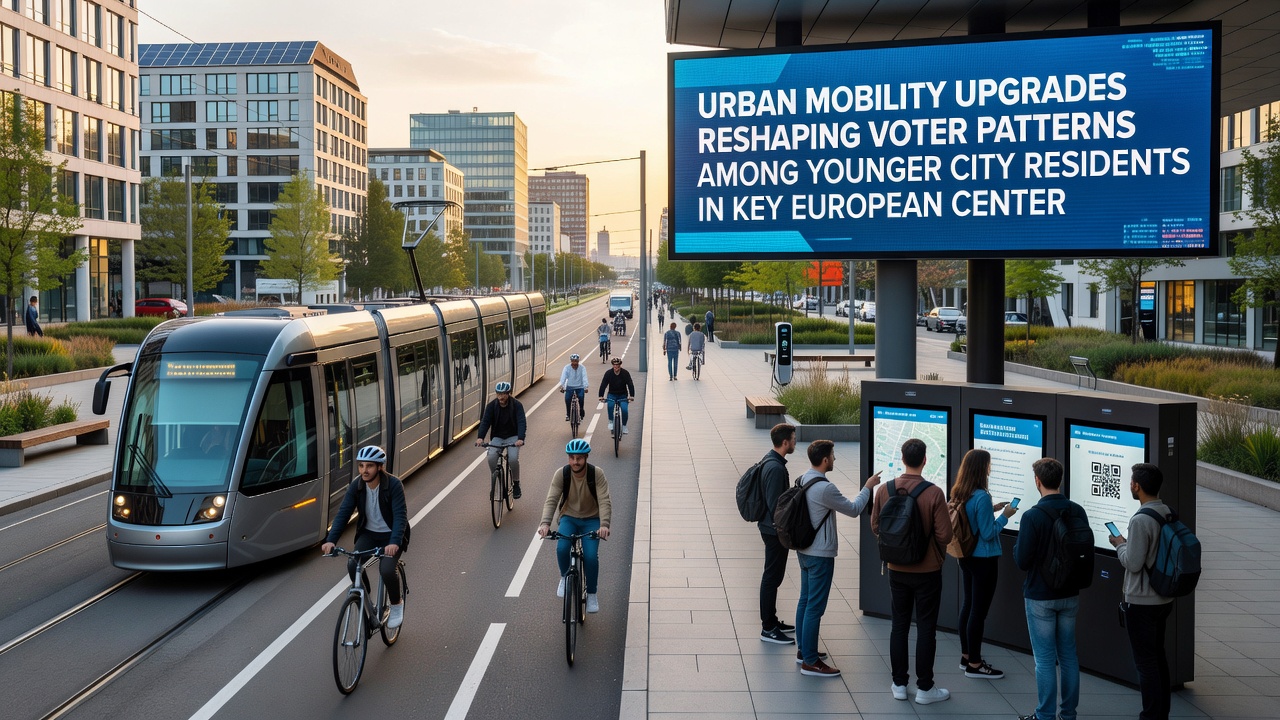
What's interesting is how the timing aligns with campaign periods. In several cities, parties that highlighted mobility spending in their platforms gained ground precisely in precincts where construction crews completed major segments just before September 2026 municipal contests. Campaign teams used open data portals to map project locations against voter demographics, allowing targeted outreach that emphasized shorter travel times and lower emissions. Residents who benefited directly from the new routes encountered campaign materials at transit stops and bike repair stations, reinforcing the link between infrastructure delivery and policy priorities.
Academic and Survey Evidence
Studies published by the European Commission’s Joint Research Centre examined mobility diaries from more than 12,000 participants aged 18 to 34 across six capital cities. The analysis revealed that individuals living within 400 meters of a new dedicated cycle track were 1.7 times more likely to cite transport policy as a top voting issue than peers farther from such facilities. The same report noted that frequent public transit users placed greater weight on environmental and urban planning platforms, a pattern consistent across income brackets and education levels.
Additional work from the Politecnico di Milano tracked app-based journey data against self-reported voting intentions. Results indicated that each additional ten minutes saved on a typical commute correlated with a modest but statistically significant increase in support for candidates advocating further network expansion. Researchers controlled for national economic trends and found the mobility factor remained independently associated with preference shifts.
Looking Ahead to Future Cycles
With several national and regional votes scheduled after September 2026, transport planners continue to publish completion timelines for remaining segments of larger networks. Municipal dashboards in multiple countries now include interactive maps that overlay planned routes with demographic layers, giving parties and civic groups clearer pictures of where mobility upgrades may next intersect with voter engagement. Data collection efforts have expanded to include e-scooter and cargo-bike usage, widening the dataset available for future correlation studies.
Conclusion
Urban mobility projects continue to reshape daily movement patterns, and records from recent elections demonstrate parallel changes in how younger city residents participate and align at the ballot box. Ongoing monitoring by academic institutions and transport agencies will clarify the strength and durability of these associations as additional infrastructure comes online across Europe.